
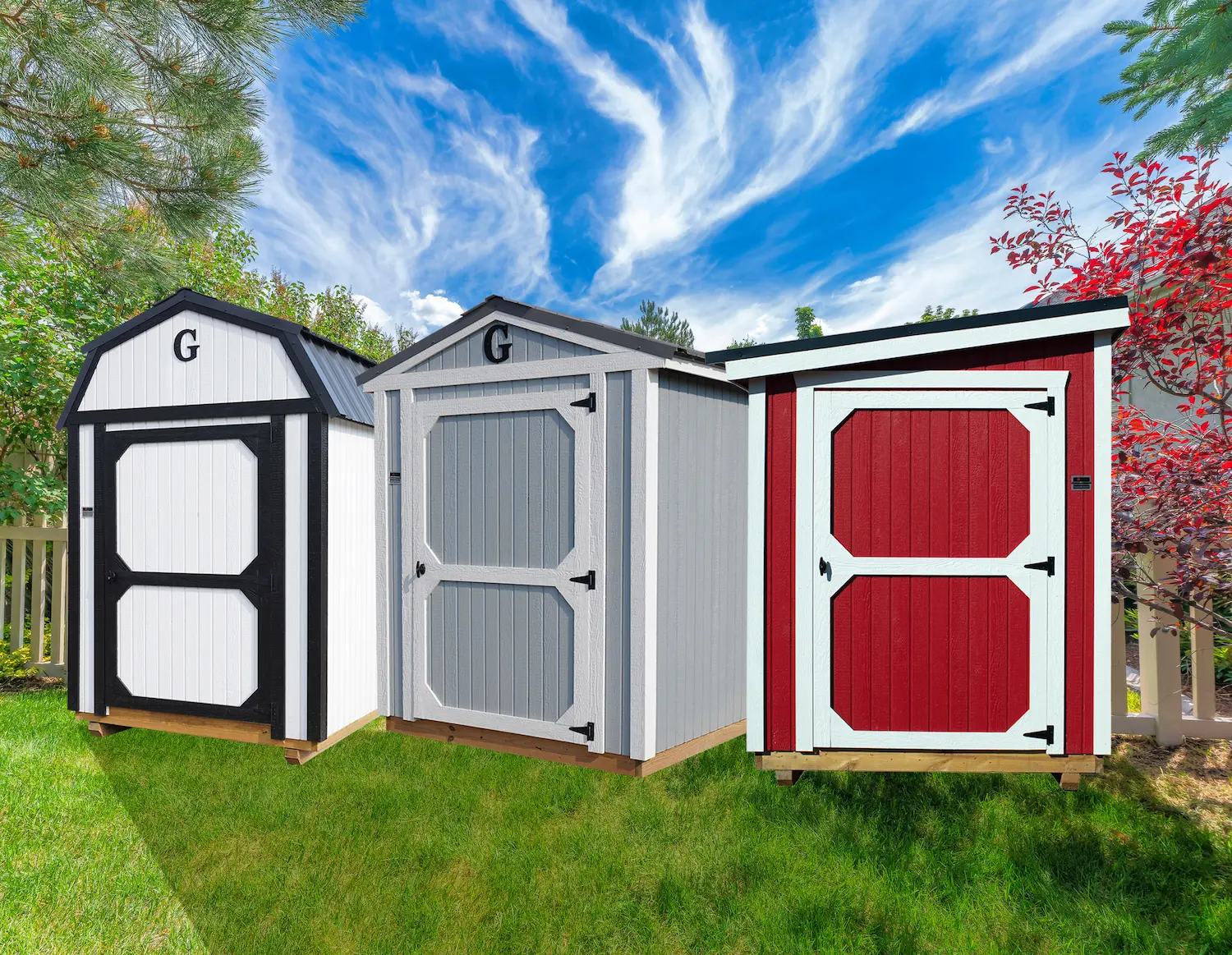
Compare in-stock and custom pre-built sheds in North Carolina. Learn what to check before buying,…
North Carolina shed permit rules depend on size, not just square footage. Under the currently effective state code, a shed with any dimension over 12 feet generally needs a building permit. A smaller shed may skip that step but can still need a zoning or land-use permit. Portable and pre-built sheds are not automatically exempt. Confirm the rules for your exact address before you order or schedule delivery.
Before you pick a shed size, it helps to know whether you need a permit for a shed in North Carolina. The answer is not a flat yes or no. It depends on the building's dimensions, where the property sits, and what you plan to use the shed for.
Many buyers assume a small shed is automatically permit-free, or that a pre-built portable building skips the process entirely. Neither assumption holds up everywhere in North Carolina. Under the currently effective state residential code, a shed with any dimension greater than 12 feet generally needs a building permit. A smaller shed may avoid that specific permit, but the property can still need zoning approval, a site plan, or another local sign-off.
This guide walks through the 12-foot rule, the difference between a building permit and a zoning permit, and what changes near Epic Sheds' Durham and Pineville-area locations. The goal is to help you ask the right questions before you choose a size or schedule delivery, not to replace advice from your local permit office.
Quick answer: If any shed dimension exceeds 12 feet, expect to need a building permit. If no dimension exceeds 12 feet, you may avoid the building permit in some jurisdictions, but you can still need a zoning or land-use permit. Durham, Raleigh, Charlotte, Pineville, and other North Carolina communities administer this process differently, so verify the rules for the installation address before you order.
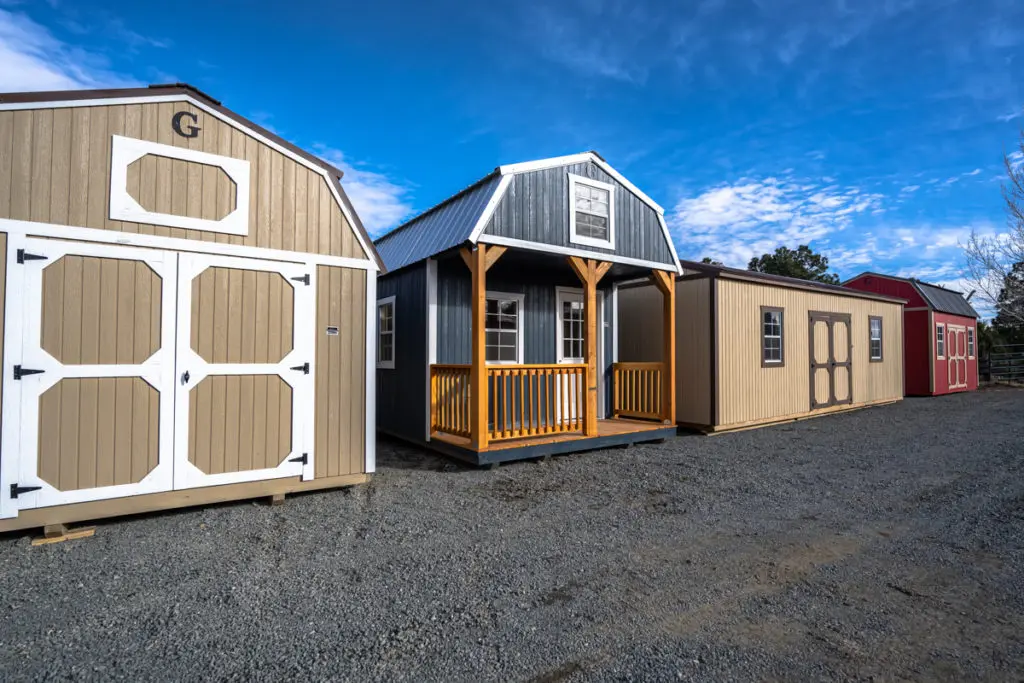
Table of Contents
What Is the 12-Foot Rule for Sheds in North Carolina?
Under the currently effective North Carolina residential code framework, a building permit is generally required when any shed dimension exceeds 12 feet. This is not a floor-area test. Length, width, and height can all trigger it.
A lot of shed guides reduce this to a simple square-foot cutoff, usually 144 square feet. That shortcut can be misleading. The rule that most North Carolina cities and counties apply looks at whether any single dimension, not the total floor area, is greater than 12 feet. A building can fall under 144 square feet and still cross the line, or sit right at 144 square feet and still qualify for the smaller-scale process.
The clearest way to see this is with two sheds of similar size:
- A 10x14 shed has 140 square feet of floor space, less than a 12x12 shed. But the 14-foot side puts it over the threshold, so it generally needs a building permit.
- A 12x12 shed has 144 square feet. If no dimension, including the total height, is greater than 12 feet, it may fall outside the building-permit route in many jurisdictions. That does not mean it is automatically approved. Local zoning can still apply.
Height matters here too. A taller lofted barn or barn-style cabin with a footprint under 12x12 can still cross the threshold if the overall height is greater than 12 feet.
How the 12-foot rule generally works
| Example shed dimensions | Floor area | General building-permit expectation | Why | Local approval still possible? |
|---|---|---|---|---|
| 8x10, height under 12 feet | 80 sq ft | May not require a building permit | No dimension exceeds 12 feet | Yes |
| 10x12, height under 12 feet | 120 sq ft | May not require a building permit | No dimension exceeds 12 feet | Yes |
| 12x12, height not over 12 feet | 144 sq ft | May not require a building permit under the general rule | No dimension exceeds 12 feet | Yes |
| 10x14 | 140 sq ft | Generally requires a building permit | One side exceeds 12 feet | Yes |
| 12x20 | 240 sq ft | Generally requires a building permit | One side exceeds 12 feet | Yes |
| Footprint under 12x12, height over 12 feet | Varies | Generally requires a building permit | Height exceeds 12 feet | Yes |
These examples show the general dimensional rule. Local zoning, permit administration, structure type, and property conditions can change the process for a specific address. According to the North Carolina Office of State Fire Marshal, the 2018 North Carolina State Building Code remains the currently effective edition, and cities such as Charlotte and Raleigh apply this same length-width-height standard through their own accessory structure rules, covered in more detail below.
Epic Sheds Note: Do not check only the floor area when comparing shed sizes. Ask for the building's exterior length, width, and total height. A 10x14 shed can enter the building-permit process even though its floor area is smaller than a 12x12 shed. Confirm these numbers with Epic Sheds before you assume a size is permit-free.
Building Permit vs. Zoning Permit: What Is the Difference?
A building permit and a zoning permit answer two different questions, and being exempt from one does not mean you are exempt from the other.
What a Building Permit Reviews
A building permit generally covers structural and code compliance. It confirms that the shed is built to withstand wind, weight, and general safety requirements, and it can require plans, structural drawings, and inspections depending on the size of the building. North Carolina General Statutes Chapter 160D, specifically G.S. 160D-1110, addresses permits for construction, movement of structures, and connected trade work such as electrical and plumbing.
What a Zoning or Land-Use Permit Reviews
A zoning or land-use permit looks at where the shed can sit on the property. This covers setbacks from property lines, lot coverage limits, height restrictions, easements, and whether the intended use is allowed in that zoning district. G.S. 160D-403 requires applicable development approvals before development can move forward, which is why a small shed can still need this kind of review even when it skips the building-permit process.
A property owner can be exempt from the building permit and still need to go through zoning review, or the reverse in less common cases. Checking one does not confirm the other.
How Shed Permit Rules Work Near Epic Sheds Locations
The examples below cover Durham and the Pineville-Charlotte-Mecklenburg area, since these are the two regions Epic Sheds serves directly. They are meant as illustrations of how the process works locally, not a full statewide directory. Every North Carolina city and county administers permits a little differently, so always confirm with the office responsible for your specific address.
Durham and the Triangle
Durham's official guidance says a building permit is required to place or build an accessory structure, which includes storage sheds. A site plan is part of the process, and structural drawings are added when a side of the building is greater than 12 feet. Placement and height also affect setback requirements, so where you plan to put the shed on the lot matters as much as the size you choose.
Raleigh handles the process a bit differently. Raleigh's accessory structures page says a permit is required regardless of the shed's size. Smaller structures follow a zoning-focused route, while anything exceeding 12 feet in any direction moves into the building-permit process. A private well or septic system on the property can add another layer of county-level approval.
If you are comparing lot sizes or setbacks for a Durham or Raleigh-area property, the storage sheds available through Epic Sheds of Durham come in a range of sizes, so it is worth confirming your site's requirements before settling on a footprint.
Pineville, Charlotte, and Mecklenburg County
In Mecklenburg County, building-code questions and zoning questions are often handled by two different offices. Mecklenburg County's CIRC FAQ states that a storage shed needs a building permit if any dimension is greater than 12 feet, and that a smaller shed still needs a zoning permit.
The City of Charlotte's zoning FAQ gives one of the clearest versions of this rule: a Zoning Use Permit is required when all dimensions are 12 feet or less, and a building permit is required when any dimension exceeds 12 feet. Structures over that threshold can require concurrent review from both the city and Mecklenburg County.
Pineville itself adds another wrinkle. According to the Town of Pineville Planning and Zoning Department, Pineville handles zoning matters within its town limits, while Mecklenburg County handles building-code matters. A Pineville mailing address or ZIP code does not automatically mean the property sits inside Pineville's town limits.
From the Epic Sheds Team: Start with the exact installation address, not just the city name on your mailing address. A Pineville ZIP code does not necessarily mean the property is inside Pineville town limits, and the correct zoning office can change from one address to the next. If you are near our Charlotte-area lot, it is worth a quick call to confirm which office handles your property before you finalize a shed size.
What Else Can Change the Permit Answer?
Meeting the dimensional threshold is only part of the picture. Local rules and your intended use for the building can add requirements even to a small, straightforward shed.
Shed Use and Utility Connections
A storage shed permit does not automatically cover other uses. If you plan to run electricity, water, or heating and cooling to the building, those upgrades can each require a separate trade permit, even when the shed itself follows the simpler approval route. This matters if you are considering a workshop, backyard office shell, or hobby space rather than basic storage. Approval for storage use does not extend to sleeping, guest, or full residential use without a separate review process.
Property Conditions and Private Restrictions
Placement can still run into problems even on a shed that looks permit-exempt by size. Local review, HOA covenants, or basic site conditions can limit where the building goes based on:
- Front, side, and rear-yard setbacks
- Distance from property lines and other structures
- Corner-lot street setbacks
- Lot coverage and accessory-building size limits
- Easements and rights-of-way
- Septic tanks, drain fields, and repair areas
- Private wells
- Floodplain or stormwater-buffer restrictions
- Historic district or landmark review
- HOA design and placement rules
HOA approval and government permits are separate processes. Passing one does not clear the other.
Do Pre-Built or Portable Sheds Still Need Approval?
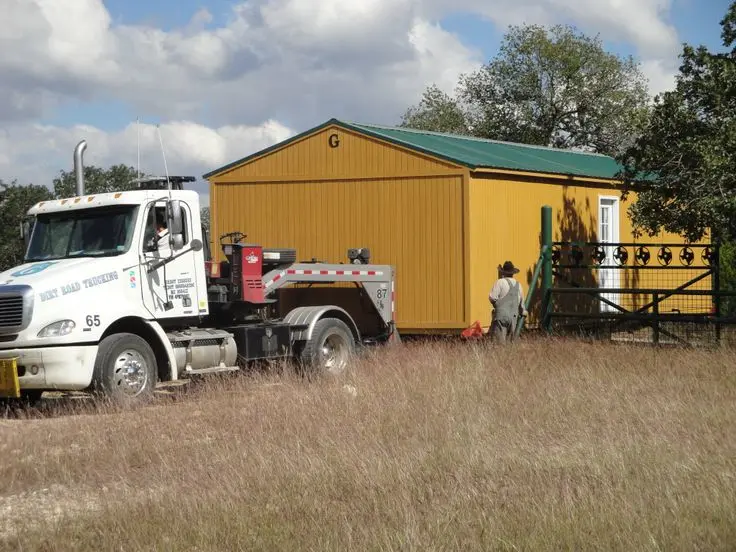
Yes, a pre-built or portable shed can still need approval before it goes on your property. The fact that a building arrives finished, or sits on runners instead of a poured foundation, does not settle the zoning or permit question on its own.
Durham's official guidance is direct about this: a permit is required to place or build an accessory structure, and "place" covers delivered buildings, not just structures built on-site. G.S. 160D-1110 also lists movement of a structure to another site among the activities that can require a permit. A shed on blocks or runners is not automatically exempt from local review just because it did not require a poured foundation.
Expert Tip from Epic Sheds: A shed can arrive fully built and still need approval before it is placed on the property. Confirm the location and permit route before delivery, especially if the building is taller or longer than 12 feet. This is easier to sort out before the order is finalized than after a delivery date is already on the calendar.
If you are weighing a portable building against a traditional site-built shed, our guide on portable storage buildings versus traditional sheds covers more of that comparison.
What Should You Do Before Ordering a Shed?
Sorting out the permit question before you order saves you from choosing a size or location that has to change later. A simple six-step process covers most of what a local permit office will ask about:
- Confirm the installation address and the jurisdiction responsible for it.
- Record the shed's exterior length, width, and total height.
- Choose the proposed location on the property and measure the distance to property lines and other structures.
- Locate your survey, and note any easements, septic areas, wells, floodplain zones, or HOA rules that apply to the lot.
- Call the local permit office and ask which approvals and plans apply to your specific dimensions and location.
- Get approvals in place before you finalize delivery.
Pre-permit information checklist
| Information to collect | Why the permit office may need it | Where to find it |
|---|---|---|
| Installation address and parcel number | Determines jurisdiction and zoning district | Tax record, deed, or local GIS |
| Shed length, width, and total height | Determines whether a building permit and structural plans apply | Manufacturer or dealer specifications |
| Proposed location and property-line distances | Used for setback and yard-placement review | Survey or plot plan |
| Existing buildings and driveways | Used for spacing, access, and lot-coverage review | Survey and site measurements |
| Easements and rights-of-way | Structures may be restricted in these areas | Survey, recorded plat, or utility records |
| Septic, repair area, and well | May require environmental health review | Septic permit and county records |
| Floodplain or drainage information | May trigger additional review or placement limits | Local GIS and floodplain office |
| Planned electricity, plumbing, or HVAC | Can require separate trade permits | Project scope and contractor plan |
| HOA or historic-district status | Can require separate private or design approval | Covenants and local preservation office |
Choose a Shed Size After You Know the Site Rules
It is easier to pick the right building once you know what your address allows. Permit research should shape your size and placement decision, not happen after a delivery date is already scheduled.
If cost is part of your planning, our shed cost guide for North Carolina walks through how site prep, permits, and building options can affect your total budget. Epic Sheds can help you compare models, sizes, and configurations once you know your dimensional and placement limits, but the property owner is responsible for confirming permit and zoning requirements with the office that covers the installation address.
Conclusion
The short version: a building permit and a zoning permit are two different checks, and any shed dimension over 12 feet generally puts you in the building-permit process. A smaller shed may skip that specific permit, but it can still need zoning approval, a site plan, or another local sign-off depending on your address, HOA, and intended use.
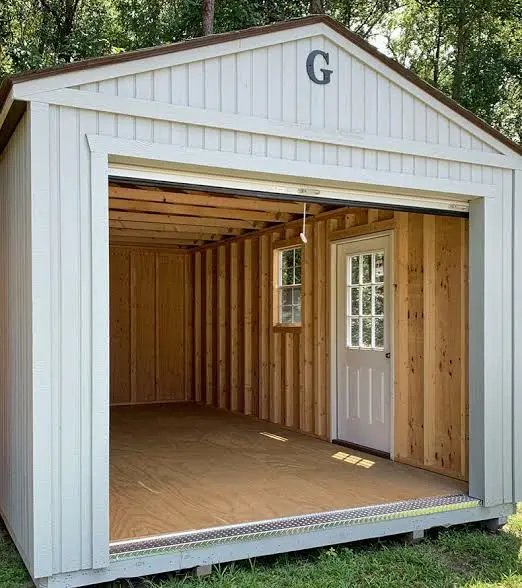
Whether you are near our display lot in Durham or our Pineville-Charlotte-area location, the team can help you compare shed sizes and styles once you have a sense of what your property allows. Request a free quote after you have confirmed your local requirements, and we can help you find a building that fits both your storage needs and your site.
Disclaimer: Permit and zoning information in this guide is general educational information based on official sources reviewed in August 2026. Requirements, forms, and code editions can change, and the correct jurisdiction depends on your installation address. Confirm current building, zoning, setback, utility, septic, floodplain, historic-district, and HOA requirements before ordering or placing a shed. Epic Sheds can help with building dimensions and options but does not replace guidance from the authority responsible for your property.
Frequently Asked Questions
What size shed can I build without a building permit in North Carolina?
A shed with no dimension greater than 12 feet, including height, may avoid a building permit under the general residential rule used by many North Carolina cities and counties. That does not mean it is automatically approved. Local zoning or land-use approval can still apply, so confirm with your local office rather than relying on a fixed square-footage number.
Do I need a permit for a 10x12 shed in NC?
It may not need a building permit if no dimension, including total height, exceeds 12 feet. The local jurisdiction can still require a zoning permit or a basic site review, so check with the office responsible for your address before you order.
Do I need a permit for a 12x12 shed in NC?
It may fall under the general dimensional exemption if no dimension, including height, is greater than 12 feet, but this is not automatic. Confirm the total height and your local rules first. Cities such as Durham and Raleigh still require some form of approval process for accessory structures regardless of size.
Does a portable or pre-built shed need a permit in North Carolina?
It can. Arriving pre-built does not remove zoning, placement, or building-permit requirements. Durham's official guidance specifically covers placing an accessory structure, not just building one on-site, so delivery of a finished building can still trigger the same review process.
Do I need a separate permit to run electricity to my shed?
Electrical work can require its own electrical permit and needs to follow the current electrical code. This applies even when the shed itself qualifies for a simpler zoning-only process. Confirm the requirements locally and use licensed electrical work where required.
Can I put a shed anywhere in my backyard?
No. Setbacks, distance from other structures, easements, septic or well locations, floodplain rules, and HOA restrictions can all limit where a shed can sit, even on a lot with plenty of open space. Check these details before you finalize a placement.
Does HOA approval replace a shed permit?
No. HOA approval and government zoning or building permits are separate processes. A property owner may need both an HOA sign-off and a local government permit before placing a shed.