
Rent-to-own sheds give North Carolina buyers a way to start with no credit check and…
Sheds in North Carolina typically cost between $2,500 and $15,000 or more, depending on building style, size, customization options, site prep, and local permit fees. Barn-style and lofted buildings generally cost more than simple gable sheds of the same footprint because they include usable overhead loft storage. The most accurate number for your property comes from a quote based on your specific size, style, and delivery address.
Table of Contents
If you are budgeting for a shed in North Carolina, the price range you find online can feel surprisingly wide. One homeowner pays $3,800 for a basic 10-foot-wide utility shed. Another spends $12,000 on a lofted barn with a porch, custom colors, and a roll-up door. Both numbers are technically correct.
The difference comes down to building style, size, customization options, site prep, and local permit fees. Knowing how each piece affects the total makes it easier to set a realistic budget before you request a quote or visit a display lot. This guide breaks it all down.
What Does a Shed Typically Cost in North Carolina?
Most portable storage buildings in North Carolina range from around $2,500 for a small entry-level model to over $15,000 for a larger custom building with premium options. The price per square foot varies based on building style, materials, and finish level, and it tends to drop as you go larger.
Angi's national shed cost data puts the average storage shed spend around $3,500, though mid-range NC buyers looking for quality portable buildings with custom options typically land higher. The table below reflects approximate market pricing across NC portable building dealers for standard configurations. These figures are starting-point estimates, not final pricing from any specific dealer.
| Size | Gable/Utility Style | Barn (Gambrel) Style |
|---|---|---|
| 8x10 | ~$3,800 | ~$4,400 |
| 10x16 | ~$4,600 | ~$5,200 |
| 12x24 | ~$6,500 | ~$7,900 |
| 16x32 | ~$13,000+ | ~$14,800+ |
Barn-style sheds (gambrel roof) cost more than a gable-style shed of the same footprint. The steep curved gambrel roof creates extra overhead volume for a loft, so you are getting more usable storage within the same yard footprint. For current pricing on Graceland portable buildings, request a free quote from Epic Sheds.
Expert Tip from Epic Sheds: When customers come in comparing prices online, the biggest gap we see is between the base price and the fully configured price. Once you add a loft, an extra window, a ramp, and custom colors, the total shifts noticeably. Start with your must-haves before choosing a size, so you are budgeting for the complete building, not just the shell.
How Does Building Style Affect the Price?
The roof style of a shed is more than a design choice. It directly affects how much storage you get, what the building can be used for, and what you will pay.
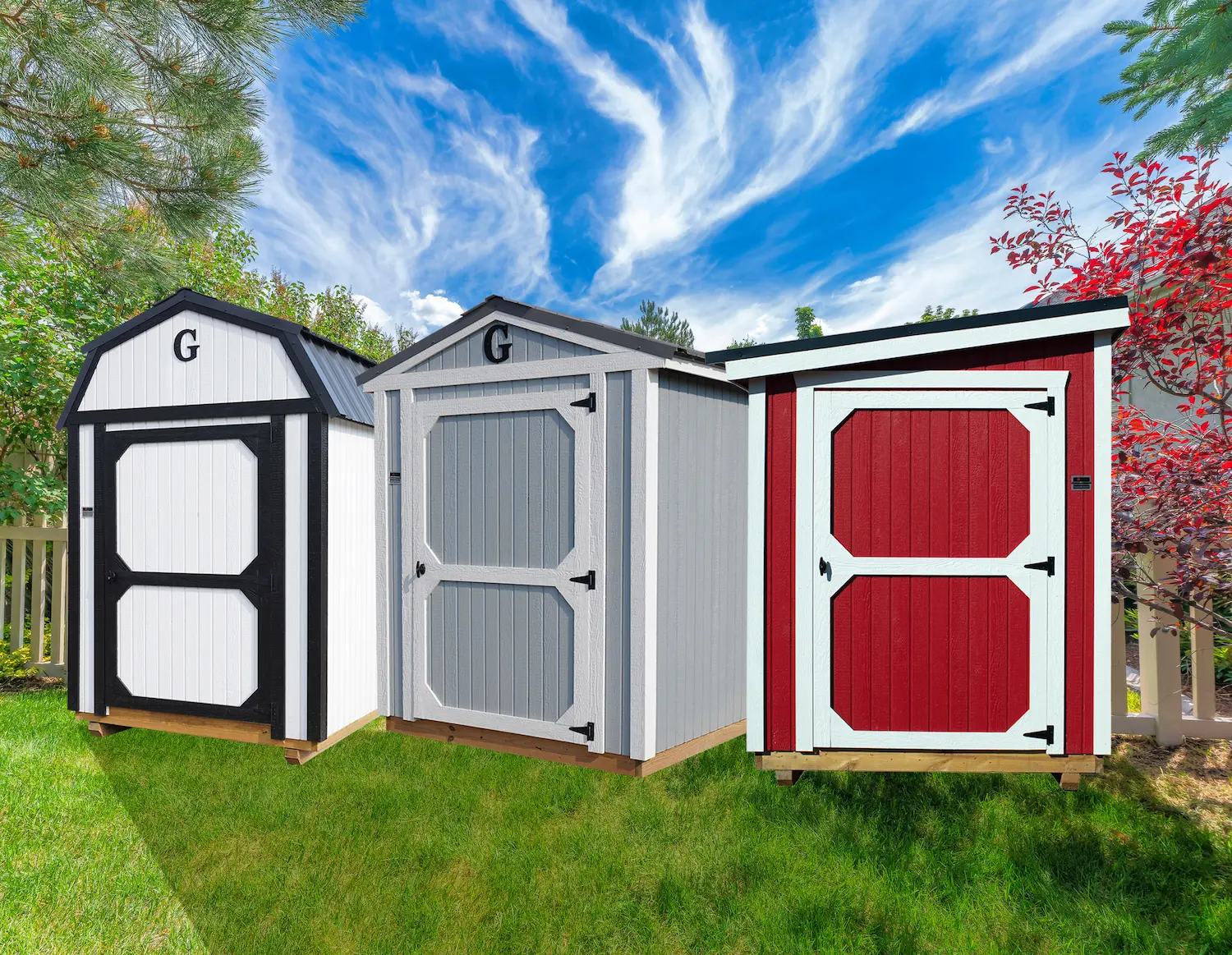
Gable-style sheds have a simple peaked roof with standard wall heights and a single-level interior. These are the most affordable option for everyday storage: tools, lawn equipment, bikes, garden supplies, and backyard overflow. If your main goal is to free up the garage, a gable utility shed often gets the job done at the lower end of the price range.
Gambrel-style sheds and lofted barns use a stepped barn-roof shape that creates a natural second tier of storage. The loft holds seasonal bins, camping gear, and holiday decorations while keeping the main floor clear for mowers, tools, or a workbench. One of the most popular Graceland styles for a reason, the lofted barn gives you more storage per footprint. The higher price reflects that extra capacity.
Portable garages are purpose-built for vehicles, boats, ATVs, motorcycles, and riding mowers. Roll-up doors, reinforced framing, and wider floor plans push the price up compared to a standard utility shed of similar length. Graceland garage widths run from 10 to 16 feet with lengths up to 40 feet depending on the series.
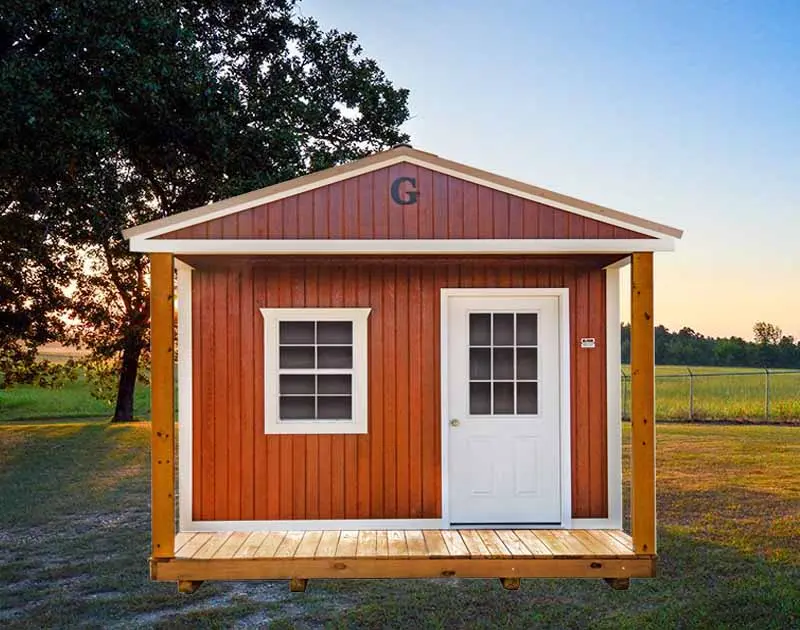
Cabin-style buildings start at a higher price point because the design is more complex: porches, heavier trim, and more finished siding options all add cost. These buildings work well for hobby space, an office-style retreat, or a backyard workspace shell. Any electrical, insulation, HVAC, or plumbing work is separate and should be reviewed against local permit and HOA requirements before you plan a full finish-out.
Epic Sheds Note: In North Carolina, a lot of buyers come in expecting a basic gable shed and leave with a lofted barn. Once they see how much the overhead loft helps keep the main floor usable year-round, the difference in price makes sense. The Durham and Charlotte lots make it easy to compare both styles in person before you decide.
What Add-Ons and Upgrades Cost Extra?
Customization options are where the base price starts to grow. Each add-on adds real usability, but they add to the final total as well.
The table below reflects general market ranges for common portable building upgrades. Exact pricing on Graceland options varies by dealer, building style, and current program terms. Ask Epic Sheds for a current upgrade list when you request your quote.
| Upgrade | Approximate Market Range |
|---|---|
| Extra window (standard single pane) | $120 to $240 per window |
| Ramp | $170 to $350+ |
| Insulated house-style door | $450 to $500 |
| Architectural shingles | $170+ |
| Loft add-on (where not included) | $200 to $350+ |
| Extra wall height upgrade | $275 to $550+ |
| Flower boxes | $70 to $100 each |
Some upgrades look optional but become practical requirements depending on how you use the building. A ramp is nearly essential if you are rolling a riding mower in and out regularly. A wide roll-up door or double wood door matters if you are storing a boat, ATV, or lawn tractor. An extra window or radiant barrier makes a workshop more comfortable through a long NC summer.
When budgeting, list the items going inside the building and think about daily access first. A building that is easy to use every day justifies a little more spent on the right doors and options.
What Does Site Prep and Foundation Cost?
Before a shed can be delivered, the site needs to be ready. For most portable buildings in North Carolina, a heavy concrete slab is not required. Three main foundation options are common, each at a different price point.
Gravel pad ($200 to $1,500+): A compacted layer of clean crushed stone, typically extending about 12 inches beyond the shed's perimeter. Gravel drains well, promotes air circulation under the building, and resists rot and mold. It is one of the more commonly recommended foundations for residential portable buildings. Angi's gravel pad data puts installation costs around $1 to $3 per square foot.
Concrete blocks ($50 to $300): Solid concrete blocks placed at key support points under the building's treated wooden runners. This is the standard setup for most Graceland portable building deliveries. The delivery crew helps level the building on site, and Graceland's delivery process notes that the driver can tell you how many blocks you will need for your specific building. Blocks are affordable but can shift over time on soft or uneven ground, so the site should be as level as possible.
Concrete slab ($2,000 to $5,000+): Required for larger garages, heavy equipment storage, or buyers who want a fully solid floor. Not necessary for most backyard shed use cases. If you are storing a vehicle and want the full garage experience, a concrete slab is worth discussing with a contractor.
Site prep is something to plan for early. A flat, accessible placement area makes delivery faster and keeps the building level for years.
What Do Shed Permits Cost in North Carolina?
Permit requirements and fees vary by city, county, and municipality across NC. The general statewide guideline is that a building permit is required when any dimension of the accessory structure exceeds 12 feet. Smaller sheds may only need a zoning or land-use permit to verify setback compliance.
Here are approximate permit costs for markets near Epic Sheds' Durham and Charlotte locations. These figures are approximate and should be verified directly with your local permitting office before you order.
| Location | What's Typically Required | Approx. Fee | Typical Rear/Side Setback |
|---|---|---|---|
| City of Raleigh | Building permit (any dim. over 12 ft) | ~$600 | 5 ft |
| Wake County (unincorporated) | Building permit (if dim. over 12 ft) | $75 + $0.25/sq ft | Varies by zone |
| Fuquay-Varina | Building permit | ~$80 | 8 ft |
| City of Durham | Permit required for all sheds | Varies by project | 5 ft (rear) |
| Charlotte / Mecklenburg | Varies by zone and project value | Varies | Varies by zone |
Durham: According to the City of Durham's accessory structure guidelines, a building permit is required before placing any accessory structure on a Durham property. If the shed is 12 feet or less on every side, a site plan is required. If any dimension exceeds 12 feet, structural drawings are also needed. Sheds cannot be placed in front yards, and corner lots have additional restrictions.
Raleigh: The City of Raleigh requires a building permit for accessory structures with any dimension over 12 feet. The permit fee is approximately $600 for a standard residential shed.
Wake County: Wake County's accessory building page covers unincorporated areas outside city limits. The fee is $75 plus $0.25 per square foot of gross floor area.
Permit rules in North Carolina can also be influenced by HOA covenants, floodplain status, utility connections, and intended use. Always check your specific property's requirements before you order.
From the Epic Sheds Team: One thing buyers often discover late is that Durham requires a permit before the shed is placed, not just built. If you order the building, schedule delivery, and then apply for the permit, the sequencing can cause headaches. We recommend checking permit requirements for your city or county early in the planning process, ideally before you finalize your size and placement.
HOA rules: Many North Carolina HOAs require sheds to match the siding color, material, and sometimes roof style of the primary residence. Plastic and metal-sided sheds are frequently banned. A custom-painted or engineered-siding portable building from a reputable dealer is more likely to pass HOA review. Check your HOA covenants and get written approval before delivery day.
Cash Purchase vs. Rent-to-Own: What Does the Monthly Payment Look Like?
If paying the full amount upfront does not fit the current budget, rent-to-own is a widely available payment option for portable buildings in North Carolina.
Epic Sheds offers rent-to-own through Graceland's financing program with no credit check required. Terms are available up to 60 months, with only the first month's payment needed to get started. Monthly payment amounts depend on the building price, the term length, and current program terms. Ask Epic Sheds for current payment details when you request your quote.
What rent-to-own does well: it lets you get the building you need now, without paying the full price upfront, and without a credit check. What to factor in: the total amount paid over a full term will be higher than the cash purchase price. Compare payment comfort against total cost before choosing a term length.
To understand how different building types might fit your budget, it helps to think through your specific use case first. Our post on 10 smart ways to use a portable building walks through the practical differences between storage sheds, workshops, garages, and cabin-style buildings so you can match a building to a purpose before comparing prices.
How to Get an Accurate Price for Your Property
The figures in this guide are market-range context for NC buyers. Your actual quote depends on the building style, size, options, delivery address, and current pricing from the dealer you choose.
Before requesting a quote from Epic Sheds, it helps to know:
- What you need to store, because the largest item determines minimum door width and building width
- Whether you want a loft, porch, windows, or a roll-up garage door
- Roughly where the shed will sit on your property and whether there are access restrictions
- Whether your HOA has rules on size, color, or siding
- Whether you prefer cash purchase or rent-to-own
Most custom Graceland orders through Epic Sheds are built and delivered in 2 to 4 weeks, though timelines vary by building style, options, and production schedule. Free delivery and professional setup are available within the service radius of the Durham and Charlotte lots. Call ahead to confirm delivery availability for your specific address.
If you are deciding between a portable building and a site-built shed, our post on why homeowners choose portable storage buildings covers the key tradeoffs in timeline, foundation, cost, and long-term flexibility.
Conclusion
Shed costs in North Carolina typically run from roughly $2,500 for a small entry-level gable shed to $15,000 or more for a large lofted barn or portable garage with custom options. Building style, size, add-ons, site prep, and local permit fees all shape your final number.
The most reliable way to budget is to start with what you need to store, then get a quote based on a specific building, your options, and your delivery address. You do not need to have every detail figured out before reaching out.
Visit Epic Sheds at our Durham lot (5032 Guess Road Unit S, Durham, NC 27712, call 919-364-0884) or our Pineville lot (618 N Polk Street Unit S, Pineville, NC 28134, call 704-385-5770) to see Graceland portable buildings in person. Or request a free quote and let the team help you figure out the right size, style, and payment path for your property.
Frequently Asked Questions
How much does a basic shed cost in North Carolina?
A basic entry-level portable shed in North Carolina typically starts around $2,500 to $4,000 for a smaller gable-style building. Prices increase with size, building style, and customization. A lofted barn or mid-range utility shed runs roughly $5,000 to $8,000 before upgrades. For current pricing on Graceland buildings through Epic Sheds, request a free quote from the Durham or Pineville lot.
Do I need a permit for a shed in North Carolina?
Permit requirements depend on your city, county, HOA, building size, placement, and intended use. In most NC jurisdictions, a building permit is required when any dimension of the shed exceeds 12 feet. Smaller sheds may need a zoning or land-use permit to verify setbacks. The City of Durham requires a permit for all sheds regardless of size. Always check local rules before ordering.
Does a shed have to match my house for HOA approval in North Carolina?
Many North Carolina HOAs require sheds to match the primary residence in siding color, material, and sometimes roof style. Plastic and metal-sided sheds are often banned under HOA rules. Custom-painted wood or engineered-siding buildings are more likely to meet HOA standards. Check your HOA covenants before choosing a style or color, and get written approval before delivery.
Is rent-to-own available for sheds in North Carolina?
Yes. Epic Sheds offers rent-to-own through Graceland's financing program with no credit check required. Terms are available up to 60 months, with only the first month's payment needed to get started. Monthly payment amounts depend on the building price, term length, and current program terms. Ask Epic Sheds for current payment options when you request your quote.